





Zoo vs. Rescue Centre vs. Sanctuary: Understanding the Key Differences When we think about places that house wild animals, terms…

Green Sea Turtle Conservation: Recovery and Threats
Quick Summary
- Green sea turtles are making a comeback: after decades of decline, global populations have increased, leading to their reclassification from ‘Endangered’ to ‘Least Concern’ thanks to long-term conservation efforts.
- Conservation works when given time: legal protection, safer fishing practices, protected nesting beaches, and community-led initiatives have allowed turtles to slowly recover—one nest, and one generation, at a time.
- The recovery is real but fragile: climate change, pollution, coastal development, and bycatch still threaten sea turtles, meaning continued protection and public involvement remain essential.
From the Brink of Extinction
Imagine this: the female emerging from the sea slowly. Each movement is heavy, yet full of determination. She had made this journey decades earlier, when the world felt quieter, darker, and far less crowded. There is a reason sea turtles return to the same beaches or coastlines where they were born—a bond shaped by instinct and survival.
The numbers tell a story that is both magnificent and heartbreaking. Over time, laying eggs became increasingly challenging. Coastal development, egg harvesting, fishing nets, and pollution all have had an impact on the species. By the 1980s, green sea turtles were officially listed as “endangered”, a label that reflected just how close the species was to disappearing altogether. For decades, their future remained uncertain.
And yet, in recent years, something has begun to change. In parts of the world where protection has been given time to work, some sea turtle populations are beginning to increase.
This article explores green sea turtles and their conservation, the challenges the species has faced, and why populations are finally beginning to recover.
 Meet the Green Sea Turtles
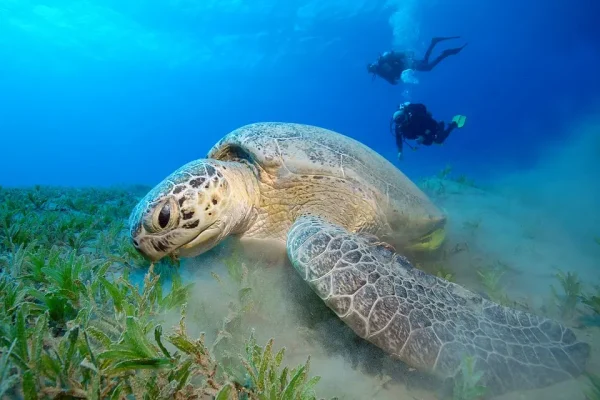
Green sea turtles (Chelonia mydas) are true marine icons. Named after the greenish fat beneath their skin, they can live for over seventy years and travel thousands of kilometers across open oceans. They have a slow life cycle, taking from twenty to fifty years to reach sexual maturity. As adults, green sea turtles become herbivores, feeding on seagrass and algae. This helps maintain healthy marine ecosystems, and when green sea turtles disappear, ecosystems face challenges.
Their life begins buried beneath warm sands. After 45-65 days of incubation, hatchlings break free using a temporary egg tooth called a caruncle. Green sea turtles emerge at night, when cooler temperatures and darkness offer protection, and begin their journey toward the sea. Birds, crabs, and mammals prey on them during these first minutes of life.
Those that reach the water disappear into the so-called “lost years”, drifting with major ocean currents for years. After migrating far, it is time to complete the ancient ritual of laying eggs back on the same beaches where they were born—also called “natal homing”—by using Earth’s magnetic field as a natural compass.
While this post focuses on green sea turtles, Malaysia’s waters are home to three other species as well: hawksbills (Eretmochelys imbricata), leatherbacks (Dermochelys coriacea), and olive ridleys (Lepidochelys olivacea). Each species has a unique role in its marine environment and faces its own challenges. Together, they highlight Malaysia’s importance as a regional fortress for sea turtles’ biodiversity and, therefore, why conservation efforts here matter far beyond its shores.
Recovery, One Nest at a Time
Dedicated researchers and locals work tirelessly to understand and protect these iconic creatures. This effort matters because every turtle that makes it to adulthood represents a victory against all odds. It is estimated that only one in 1,000 hatchlings will reach maturity.
For a species defined by patience, recovery was never going to be quick. The impact of conservation efforts can take a generation to appear. For years, nesting numbers remained low, increasing fears of being too late.
Then, things started to change.
Today, in several parts of the world, green sea turtle populations are showing signs of recovery. In October 2025, IUCN reclassified it from “Endangered” to “Least Concern” on the Red List of Threatened Species, marking a major conservation milestone. Since the 1970s, global populations have increased by 28% worldwide.
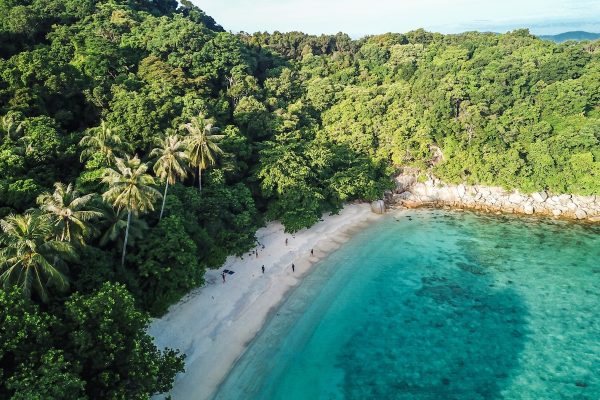
Malaysia is part of this wider success story in green sea turtle conservation, particularly along the coastline of Terengganu. Stretching hundreds of kilometres along Peninsular Malaysia, Terengganu plays a key role in protecting nesting beaches. Covered in white sandy havens for turtles, it has become a regional conservation powerhouse, recording a dramatic 379% increase in nesting activity over the past few decades.

Why Terengganu Attracts Sea Turtles
Terengganu is one of Malaysia’s most important nesting grounds for sea turtles, welcoming, on average, 2,000 to 2,500 nests yearly—most of them laid by green sea turtles. While they are showing signs of recovery, other species are still struggling. Leatherbacks, hawksbills, and olive ridley turtles have declined dramatically. Leatherbacks, once nesting here in the thousands, now record fewer than a dozen nests a year, signalling a near collapse of the population.
So, what originally made this location a flourishing environment for sea turtles then?
The coastline offers ideal natural conditions with crystal-clear waters combined with golden sands. These beaches have what it takes to create a successful nesting site: soft enough for determined mothers to excavate their nests, yet stable enough to protect developing eggs throughout the crucial incubation period. Sea turtles prefer elevated areas, often nestling under protective vegetation.
In Terengganu, many beaches are still relatively underdeveloped and dark, especially remote mainland beaches and protected islands like Perhentian. They have less artificial lighting and fewer large buildings. Hatchlings rely on natural light, and soon after emergence, they crawl to the ocean. However, when artificial light is added to the equation, it makes newborns confused, and instead, they might end up heading inland or toward human development.
Green Sea Turtle Conservation Shows Signs of Recovery
The recovery of green sea turtles did not happen by chance. It is a combination of legal protections, active conservation, and shifting cultural values.
Sea turtles in general are known to be lucrative for their meat and eggs, which have historically been a primary driver of their decline. Enforcement laws such as the “Endangered Species Act” and international trade bans have had an impact on the commercial harvesting of turtles.
The fishing industry has made progress in preventing accidental capture of sea turtles, also called bycatch. The introduction of Turtle Excluder Devices (TEDs) and the use of circle hooks have allowed more turtles to escape fishing gear.
When it comes to nesting beaches, conservationists and local rangers are actively protecting them from poachers and predators. Additional efforts to reduce the amount of artificial lighting close to beaches have helped hatchlings move toward the ocean.
Education, cultural shifts, and ecotourism have also played major roles in the success. Instead of considering turtles as something to consume, younger generations now see them as important to protect. This has led to the rise of ecotourism as well. Former poachers have found new and alternative livelihoods as guides and protectors, providing locals with a financial incentive to conserve them.
 Challenges That Remain
However, despite these gains, the future remains uncertain. Ongoing issues persist, one of which is climate change. Temperatures are crucial in incubation and sex ratios, as warmer temperatures tend to increase the number of females in hatchlings. However, studies have shown that certain populations have begun to adapt nesting sites to cooler locations or earlier in the year.
Human activity continues to pose risks. Plastic pollution, boat strikes, and accidental capture still claim countless turtles each year. Coastal development brings artificial lighting, while expanding tourism places creates additional pressure on nesting sites.
A Future Worth Protecting
This progress matters precisely because it is slow. Each nesting female seen today reflects the protection put in place decades ago. It is proof that when conservation is given time, space, and commitment, species can recover. But this is not a victory lap—the recovery remains fragile.
The future now depends on whether conservation efforts can adapt to emerging challenges and whether long-term protection remains a priority in the decades ahead.
This is where individuals matter. Supporting conservation organisations, reducing plastic use, and respecting nesting beaches all help. Even small actions, when sustained over time, become part of the larger story of recovery.
If you want to take it one step further, you can join a program to protect them. Volunteering is an important part of green sea turtle conservation, helping protect nesting beaches and monitor hatchlings. To take part in this recovery, join our turtle program in Perhentian and help protect sea turtles in their natural habitat!
GET IN TOUCH
Related Posts


